🔒 Enter password to unlock
Refreshing a 3-year-old brand to drive market differentiation, revitalising user acquisition
Q2 2024
9 min read
Lethargic, uninnovative, outdated. Market expansions no longer drive growth.
I rallied the business and product organisation to recognise the need for differentiation through collaborative activities, user research, and the sales pitch of a dream.
👋🏻
Design Lead
⬆️
~€24m yearly GMV uplift
⬆️
~5.3% net subscriber increase in 3 months
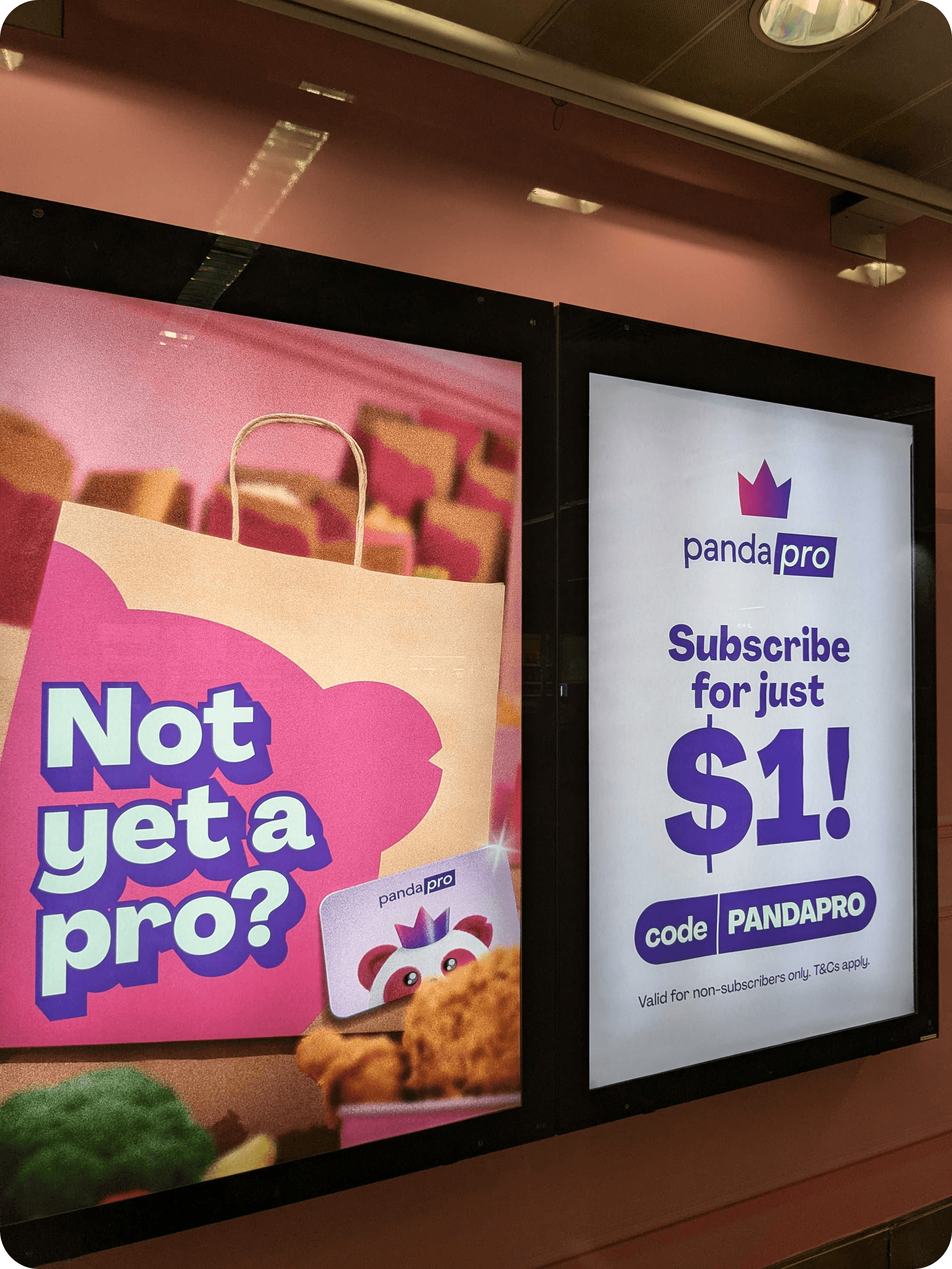
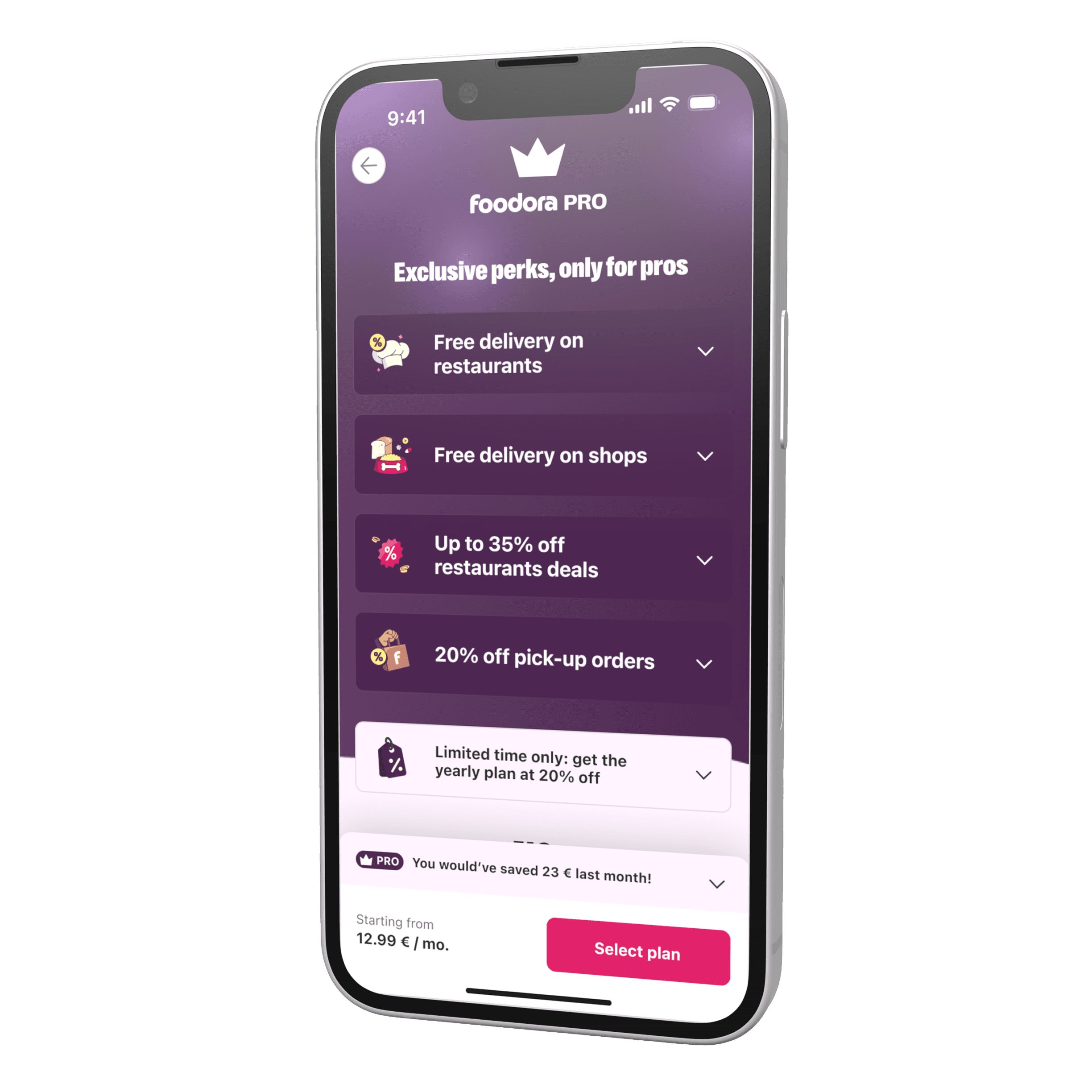

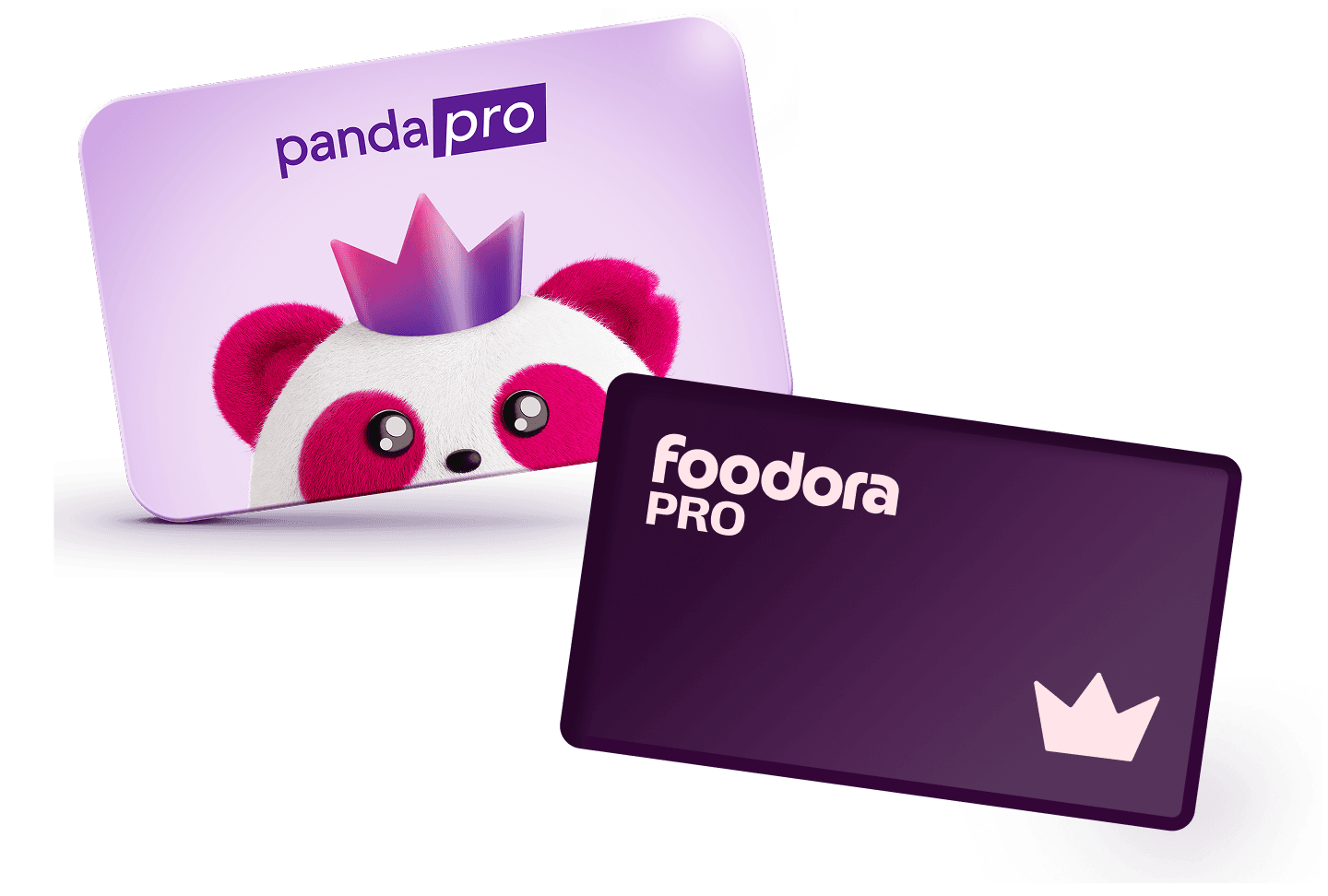
It’s slowing down
Subscriptions was launched in 2020 for foodpanda as pandapro. EU and MENA expansion came later in 2023.
After two quarters of launching new markets, the team faced what’s inevitable:
Slow growth
High customer acquisition costs
Lethargic roadmap
Low competitiveness
We’re now everywhere but many steps behind competitors.
“I can’t tell if I’m a subscriber or not”
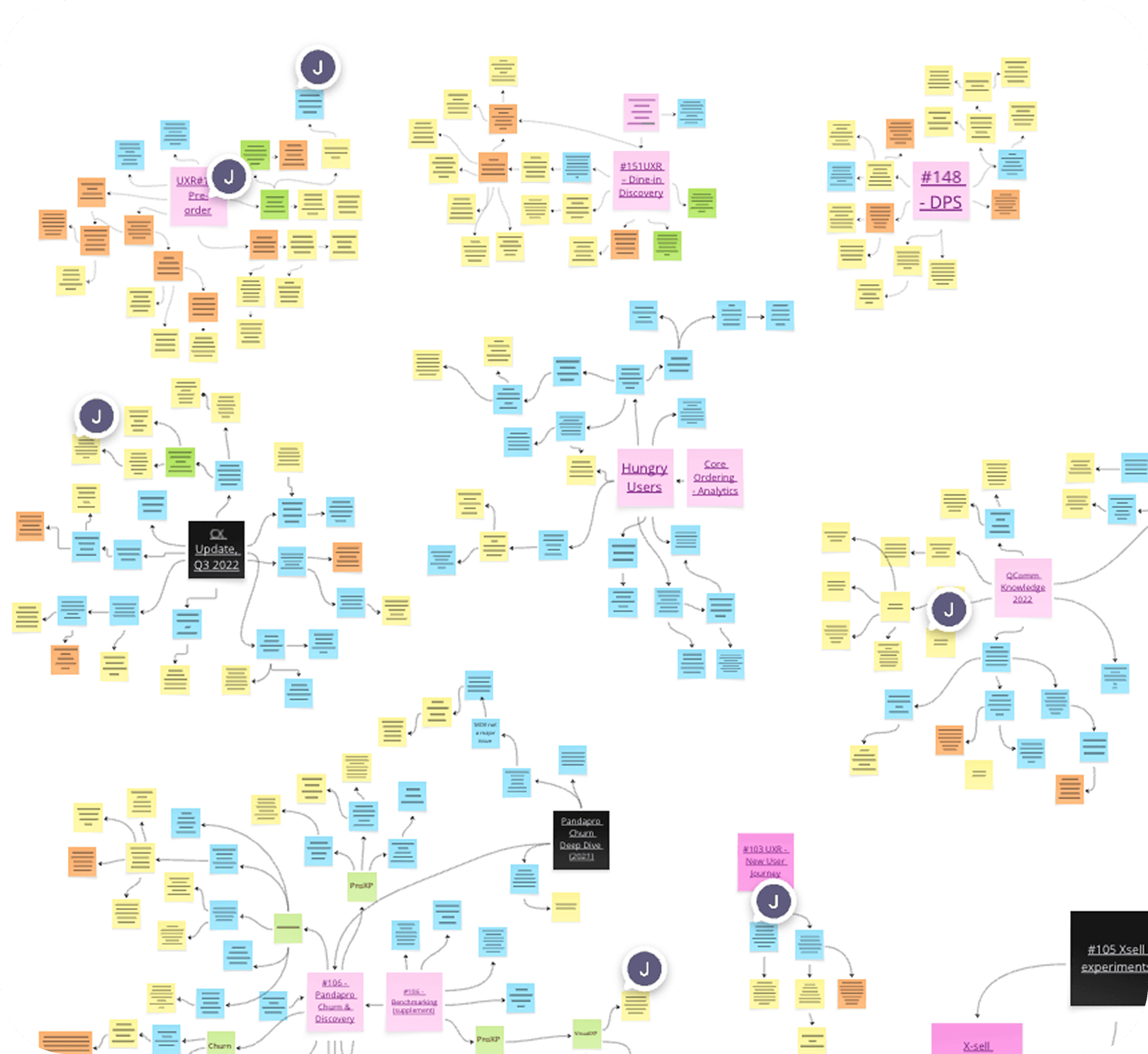
With a user researcher, we dug into all past user studies to understand the state of subscriptions today.
Concerningly, it looks like after subscribing, it is difficult to see if they are a subscriber or not. Furthermore, poor experiences contribute to this mismatch:
Bad customer service
Slow delivery times
Unclear discounts
Invisible savings
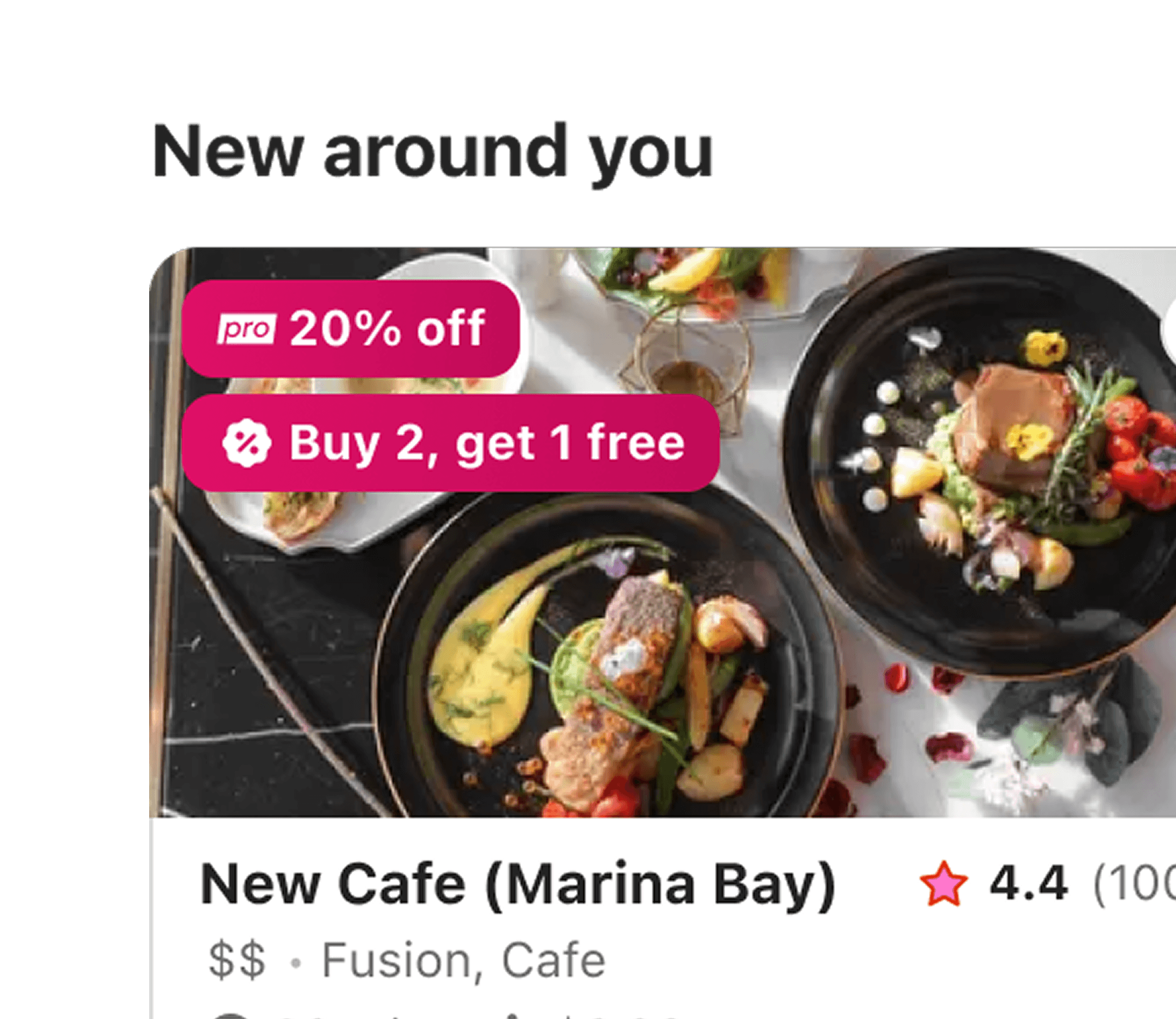
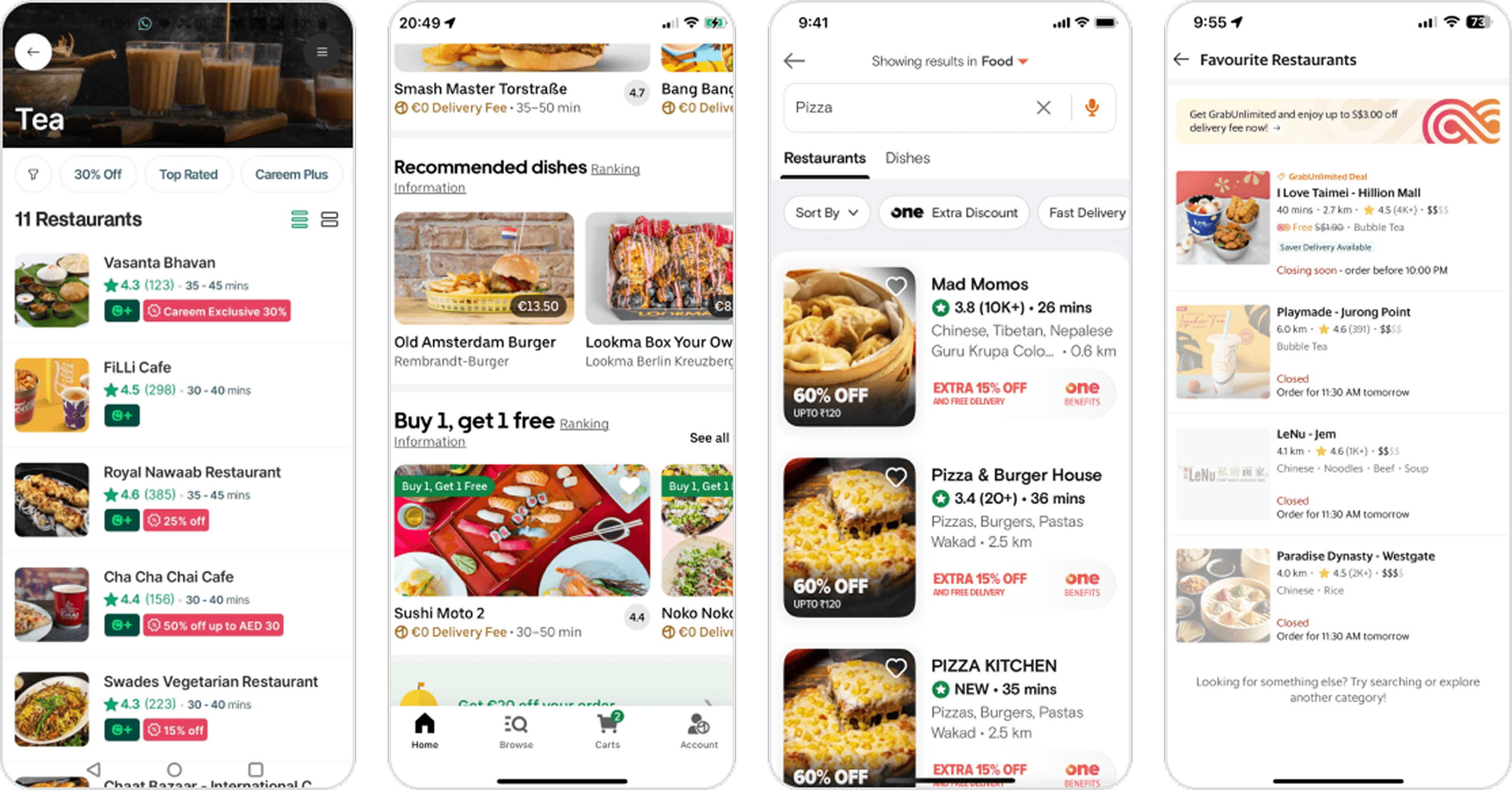
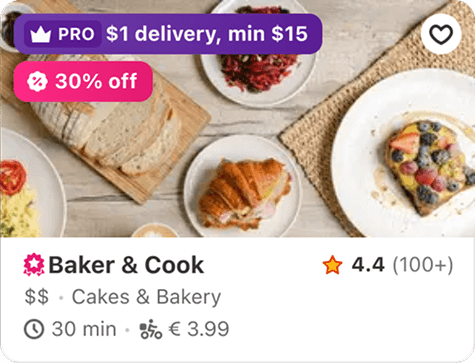
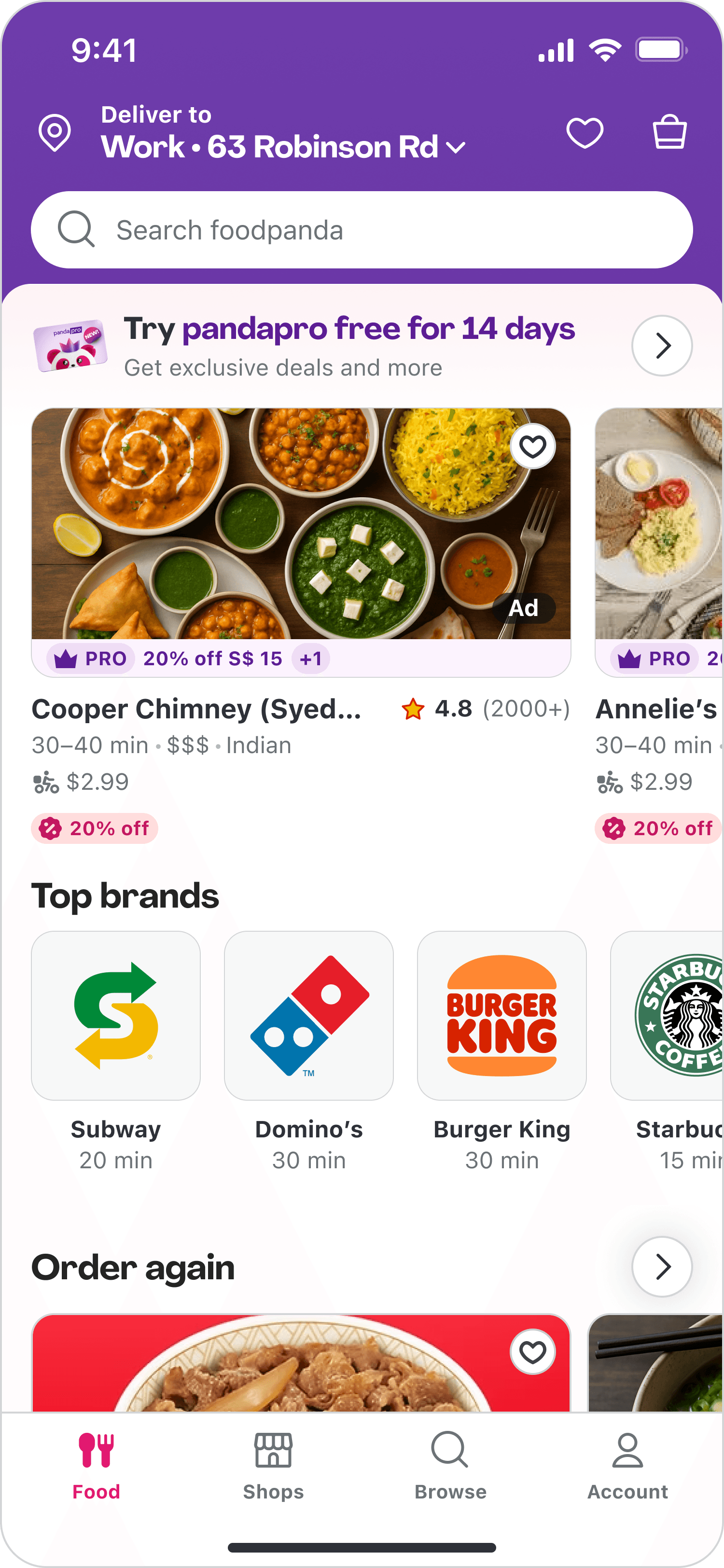
Visually, subscription discounts (indicated with a pro) are almost indistinguishable from the platform discounts (indicated with an icon).
Concerningly, it looks like after subscribing, it is difficult to see if they are a subscriber or not. Furthermore, poor experiences contribute to this mismatch:
In a usability test, users had to tap on the subscription discount within 5 seconds of viewing the page.
Only 20% of subscribers can do it within 5 seconds.
Broadly, that meant:
Poor vendor discovery
Poor discount discoverability
Direct impact on order frequency and value
Building a narrative
Competitors did it differently: they’re always visually differentiated down to the colours. This allowed subscription discounts to stand out.
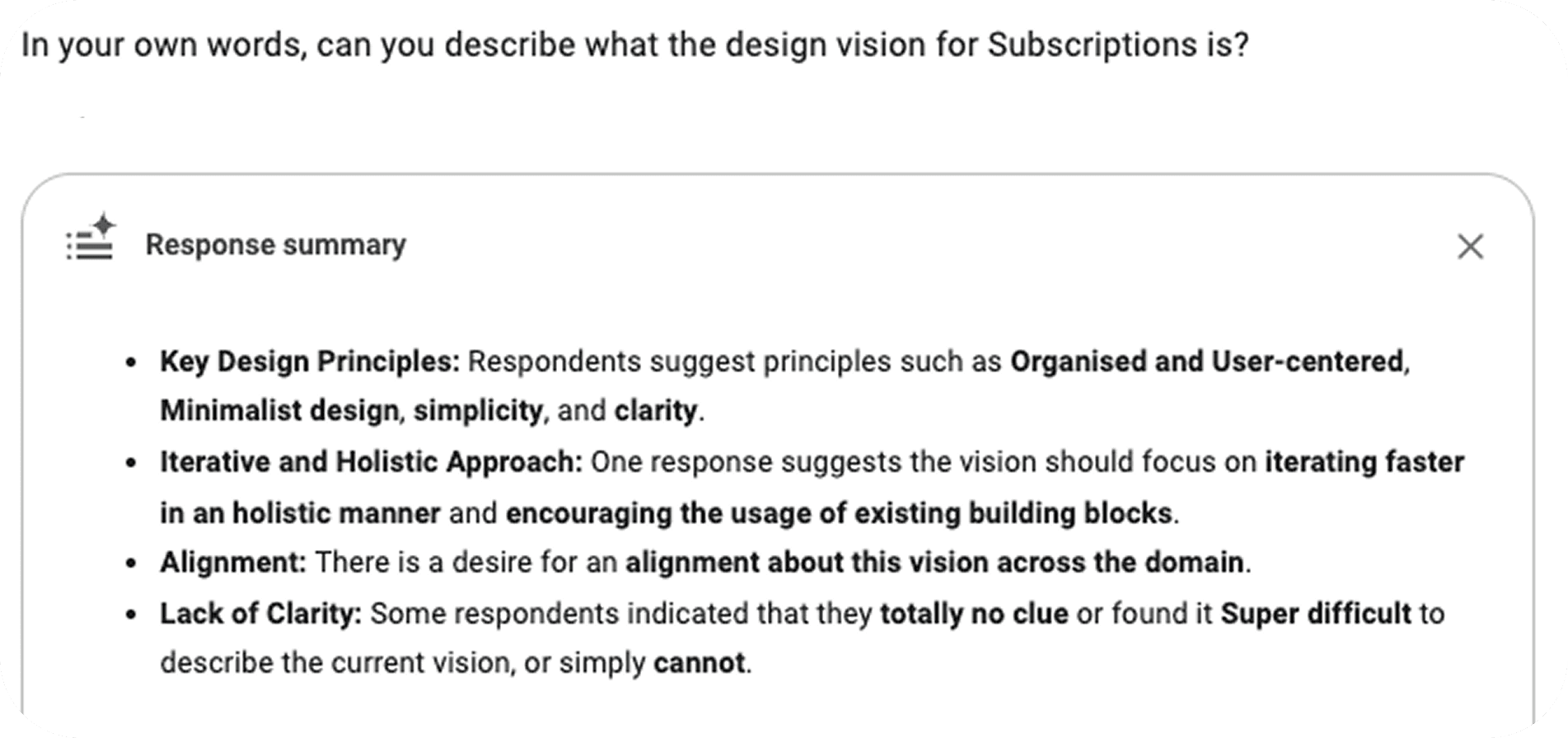
I sent out an anonymous internal survey to cross-functional partners, product, tech, and design team members.
It measured the perception of design strategy and vision in the team.
Concerningly, the team found a “lack of clarity”. This was echoed across the engineers and cross-functional partners (e.g. marketing).
Structuring the process
I crafted a sequential, methodical approach:
Presented the narrative. This was done by presenting survey results and competitive analysis.
Collaborative brainstorming. Using a novel workshop approach to craft design pillars.
Vision piece. With my design team, we pitched a vision piece to senior leadership, which came with colour and logo changes.
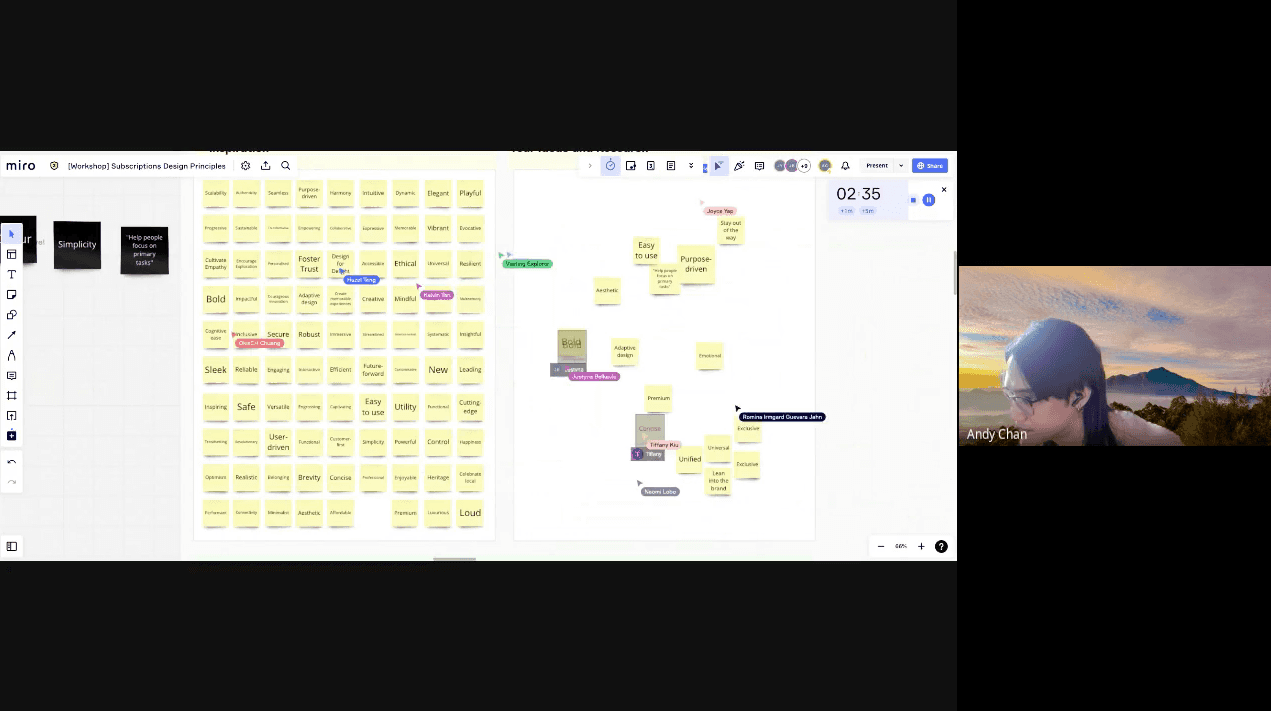
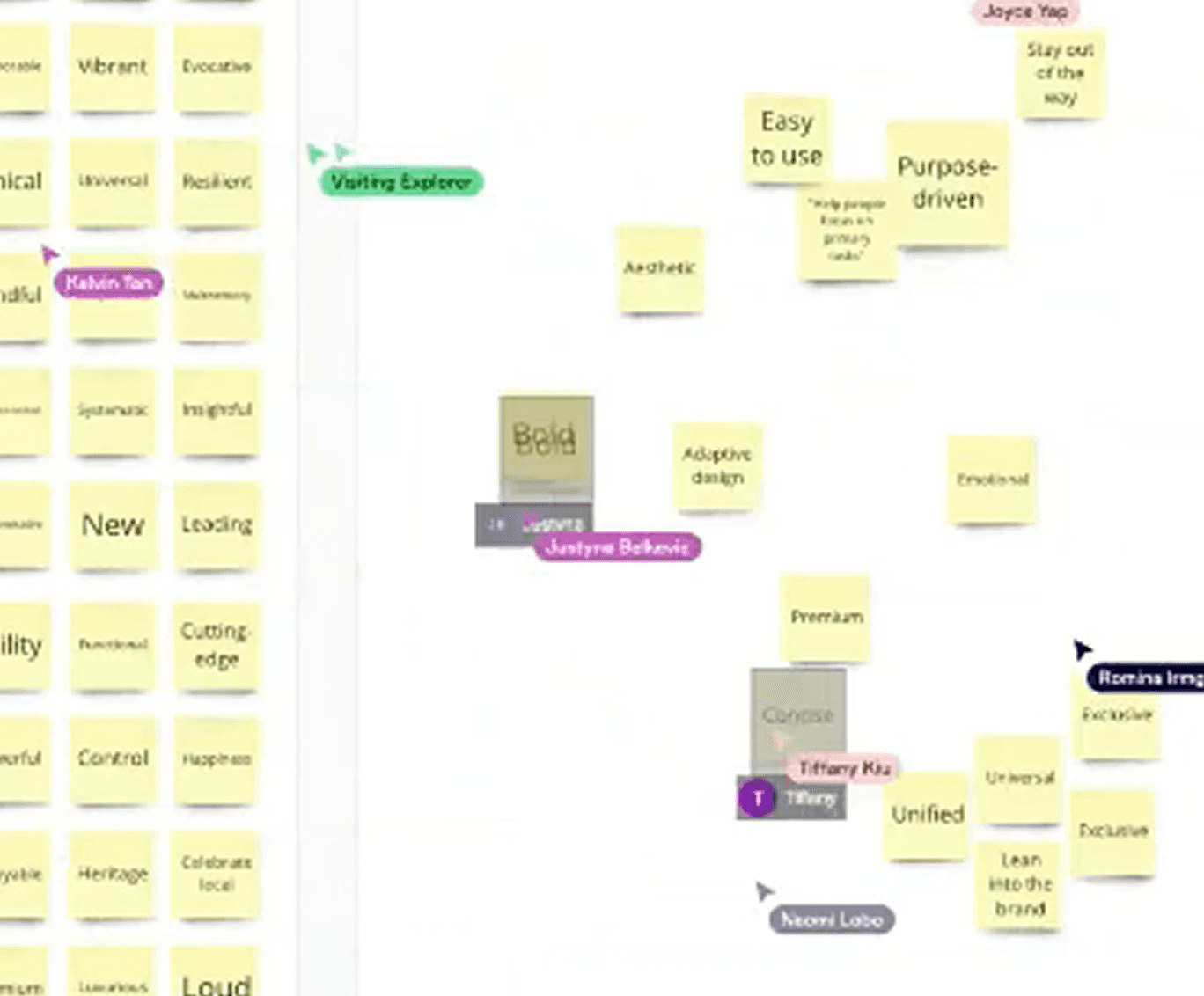
Screenshot of the first activity where I facilitated users to express what they feel should be a “design pillar” using adjectives and descriptors
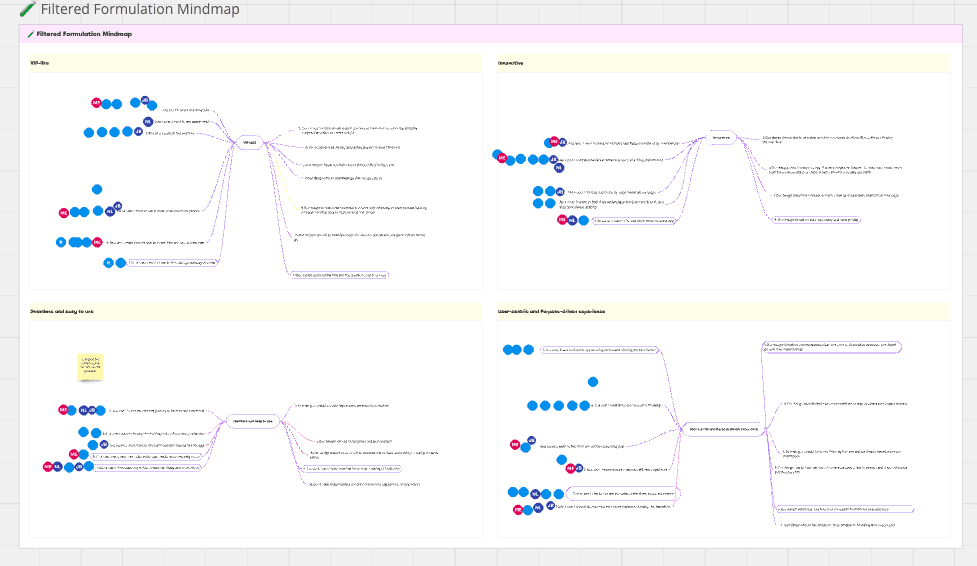
Mindmap of each design pillar, where the left starts with “A user would feel…” and it ends with “…so our design should…”.
Four design values
Differentiate: To build an industry-leading, novel experience for users
Purposeful: Nothing is unnecessary
Connected: All products are connected with one another in the ecosystem
Exclusive: Give our users undivided attention at all times
Renovate first, innovate after
Starting with the foundations made buy-in easy.
Visual differentiation is about being prioritised, privileged, and preferred. Subscribers paid to unlock something more: and that’s what the renovation is for.
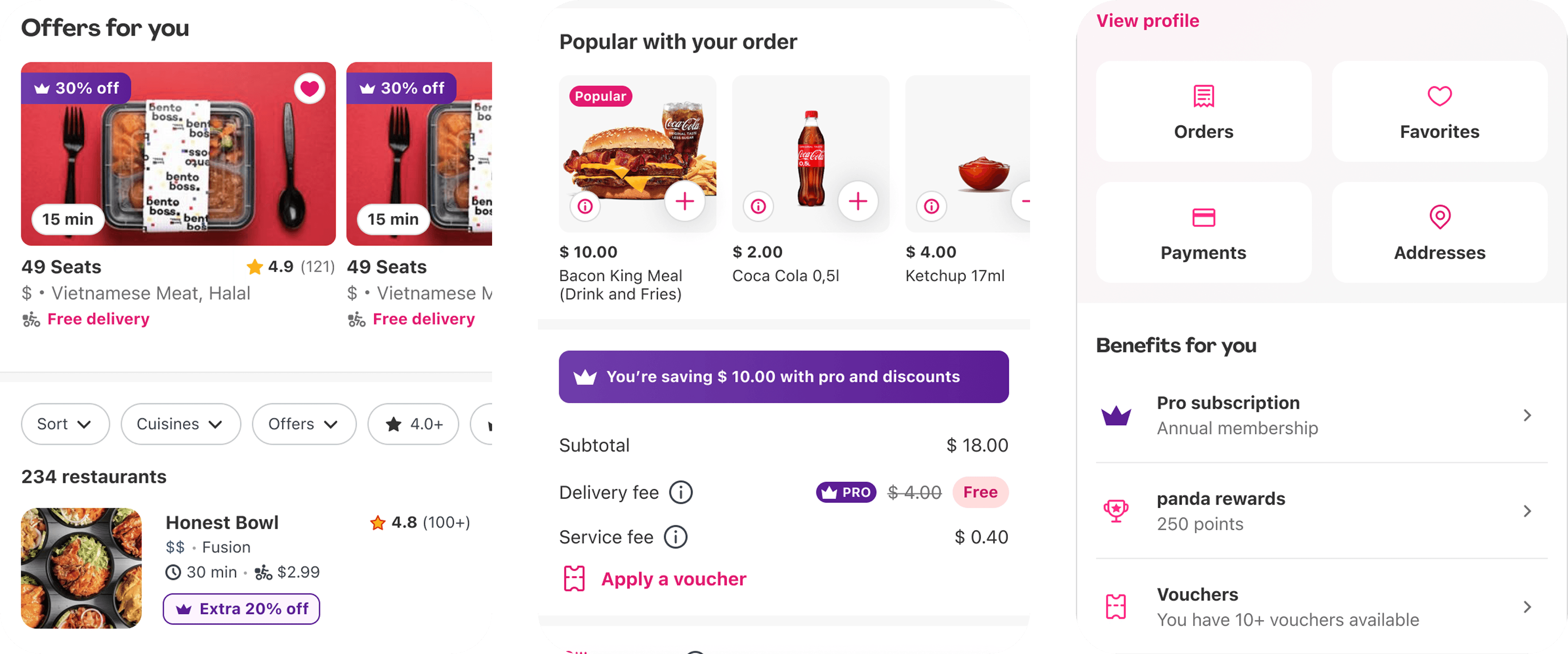
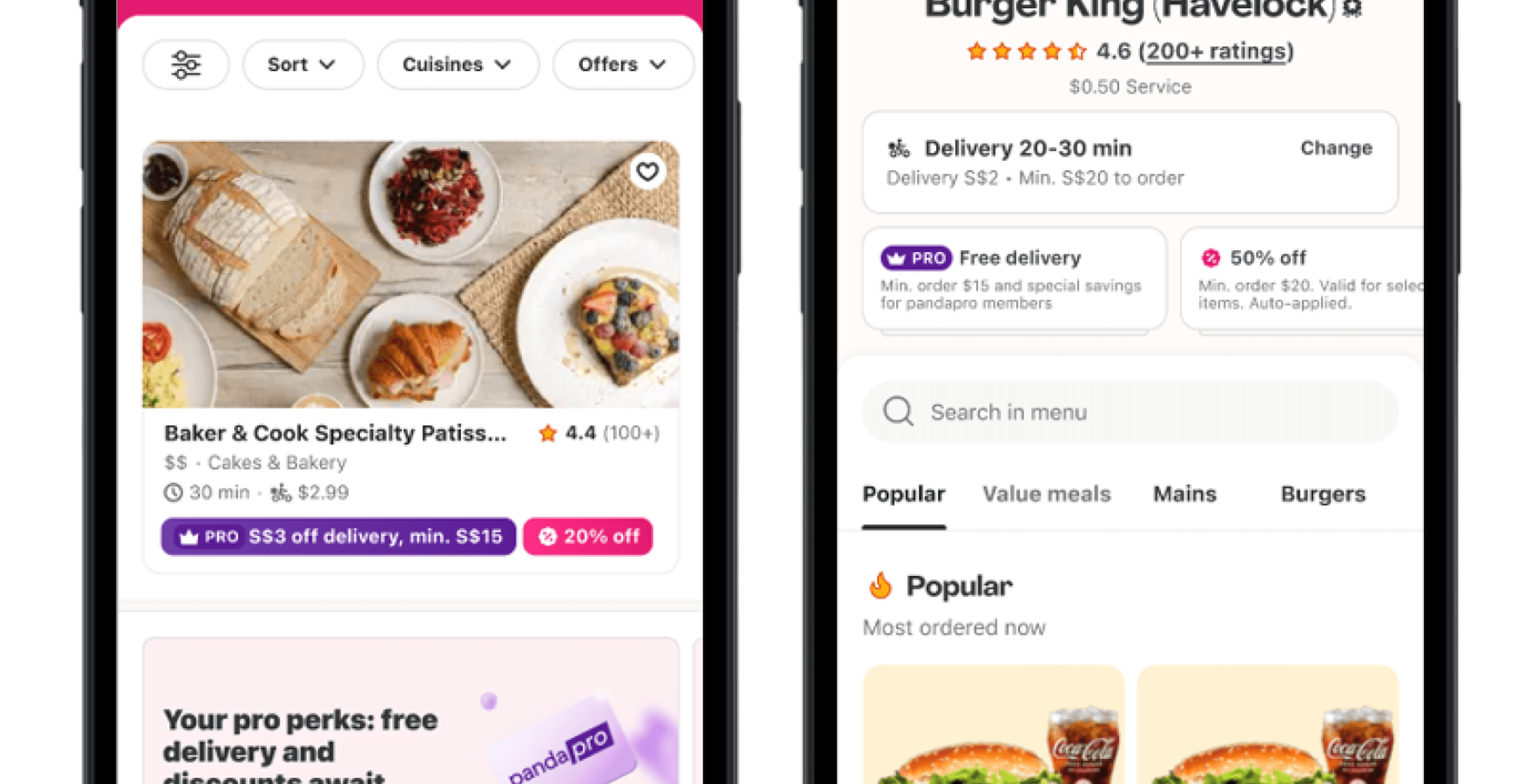
How I got here
A vision piece helped senior stakeholders see what it potentially means to be “differentiated”. This included various prototypes showcasing groundbreaking features (at that time).
One of these feature is an AI-powered, chatbot interface to notify users to select replacement items if it’s predicted to be out of stock.
Although it could be platform-wide, my team initially pitched it for subscribers only as a premium feature.
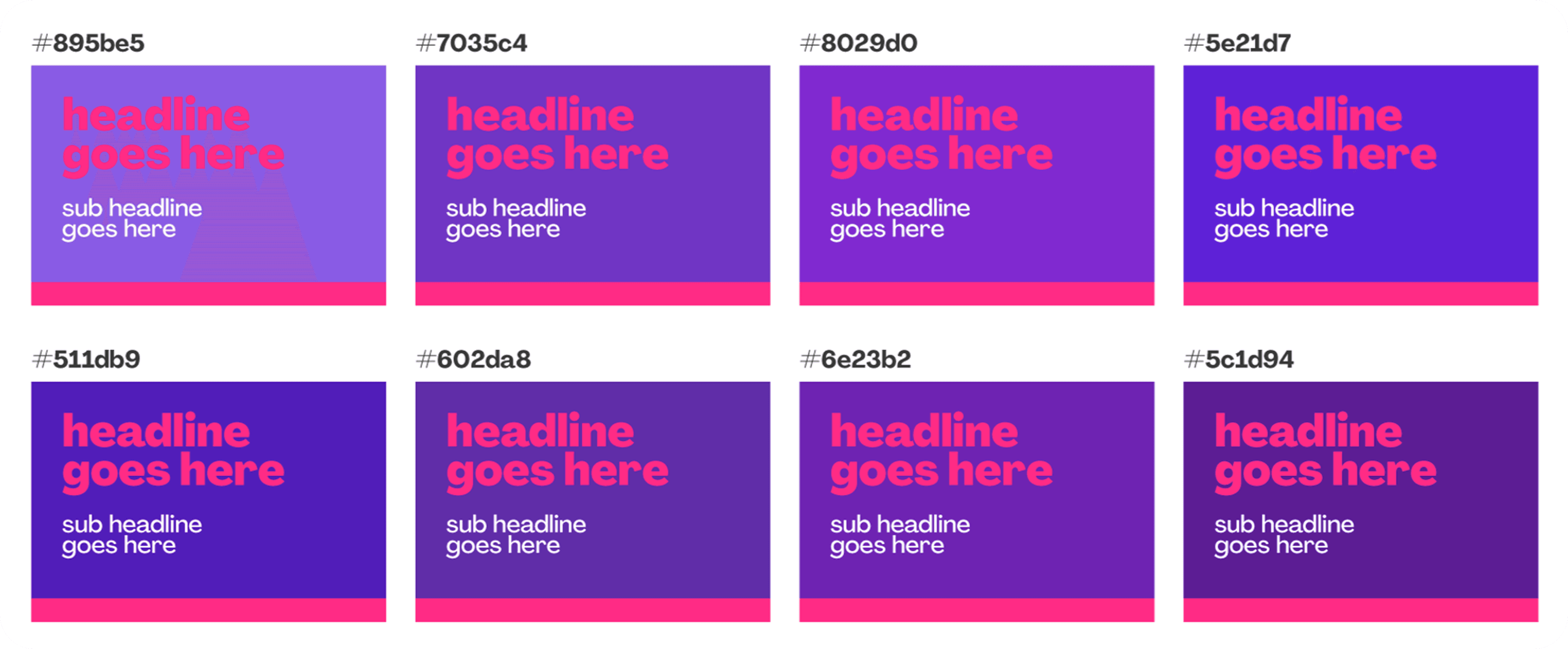
What stood out was the colour and logo changes, which were then hypothetically thought as the smallest possible experiment.
I created the proposal for colours and ensured they met AA and AAA standards.

Measuring impact
❓
How might we determine if a visual perception affects product metrics?
User metrics like time to recognise a deal, deal mechanic comprehension rates were measured initially. Collectively, these form a quantitative understanding of user behaviour that may predict order success / frequency / value.
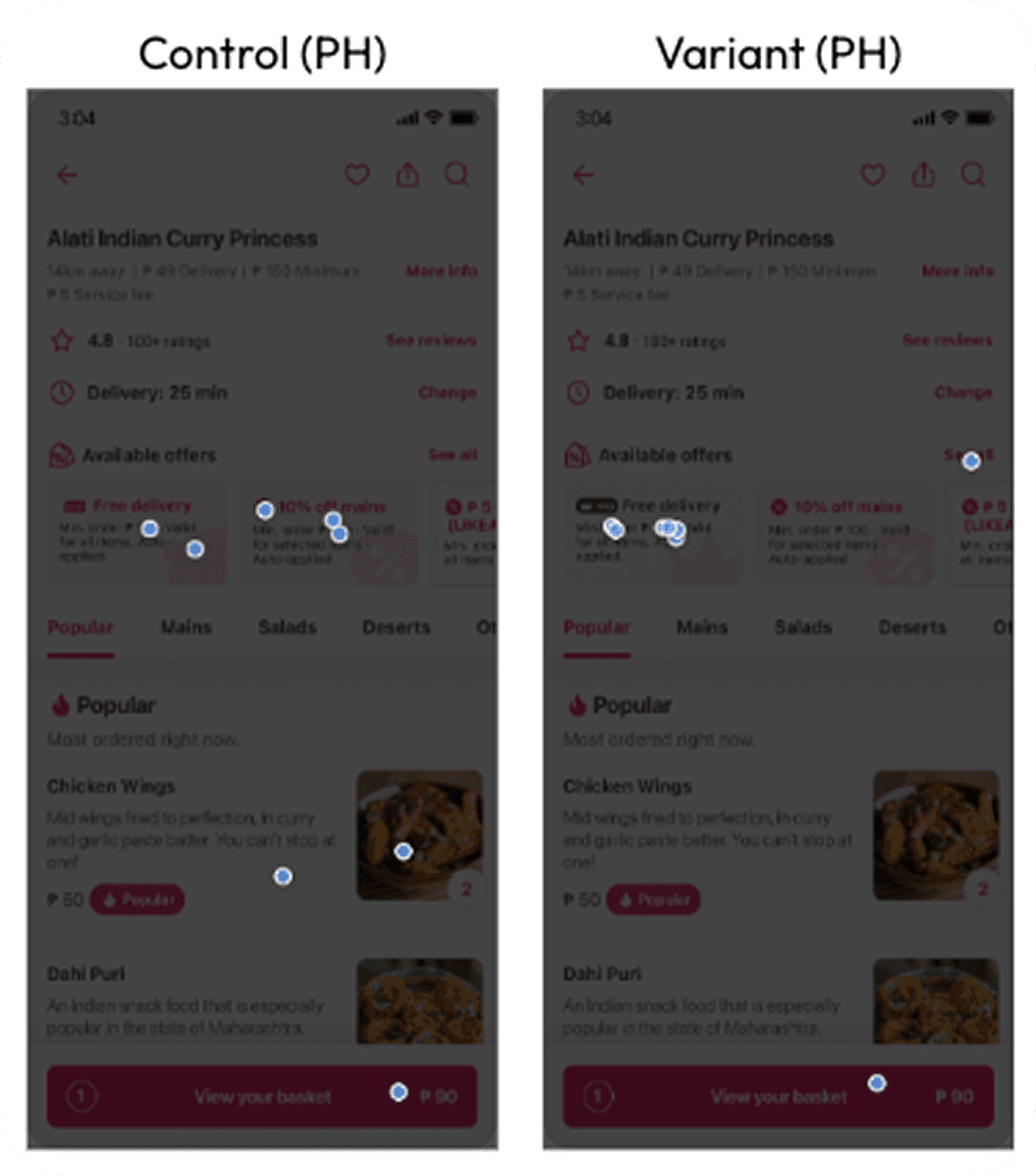
Improving discount recognition and recall
In usability tests, the new colour:
Improved speed in recognising subscriber-only deals
Improved recall of specific deal mechanics, even when it’s complicated (e.g. 30% off select items)
Improving brand associations
With the new colours:
95% of users indicated that the deal is clear and transparent (even though the text did not change compared to control)
90% of users associated the new colour with “VIP” and “exclusivity”
Conclusion
Impact
5.3% increase in total net subscribers
~€24m yearly GMV uplift
While the results seemed small, this was a critical step in many aspects of product direction such as:
Risk appetite
Design culture and strategy
User-centricity
This project was challenging and was difficult to see through as everyone wrestled with ongoing priorities to react to market conditions. I had to stick to my guns and believe that differentiation was the way. My role was clear: design the environment to design the future of subscriptions. Having to pitch to C-suite folks was also a challenge to my presentation and soft skills.
Nonetheless, without convincing folks that a brand refresh was needed, I strongly believe that the product would remain stagnant. This project goes beyond bottom line, but also affects how the team prioritises and works in the future.
Next Steps
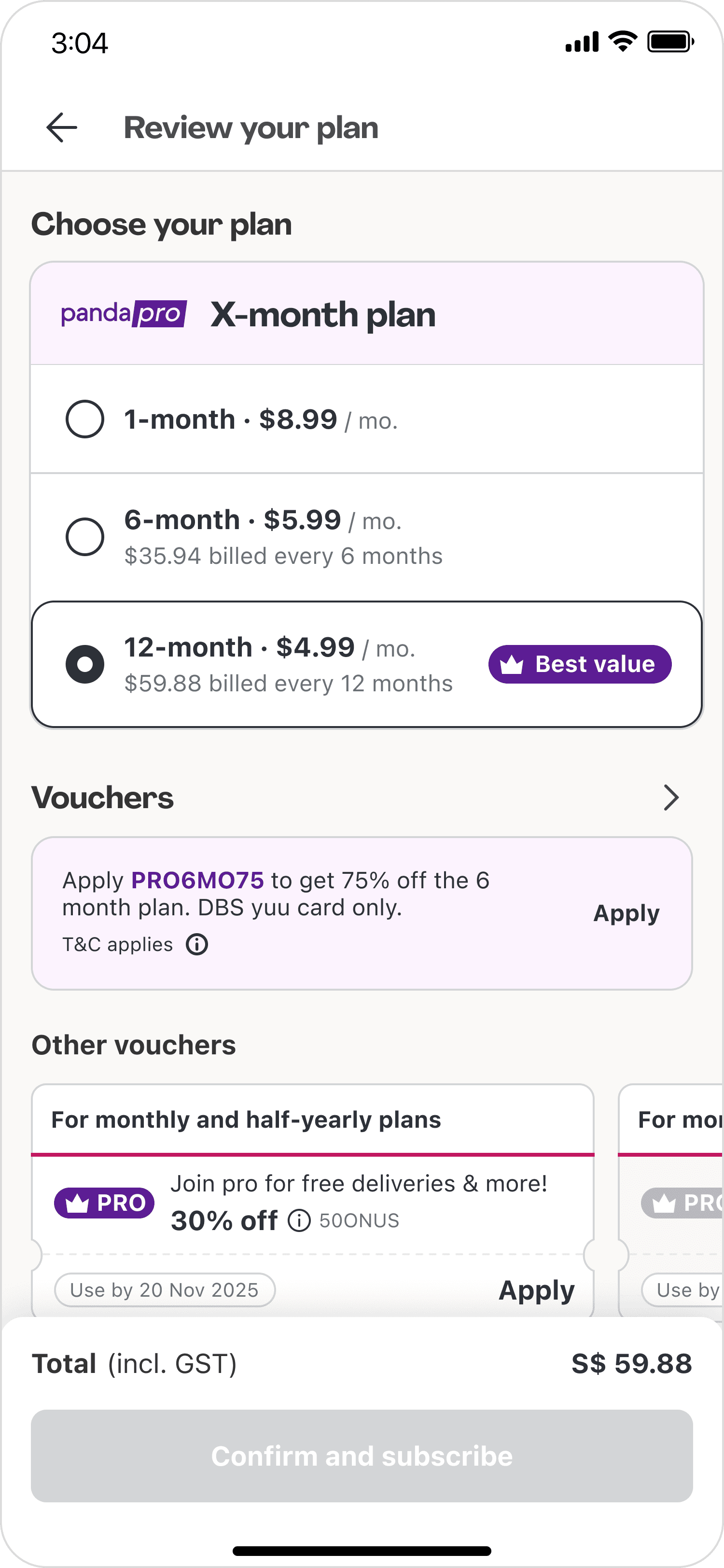
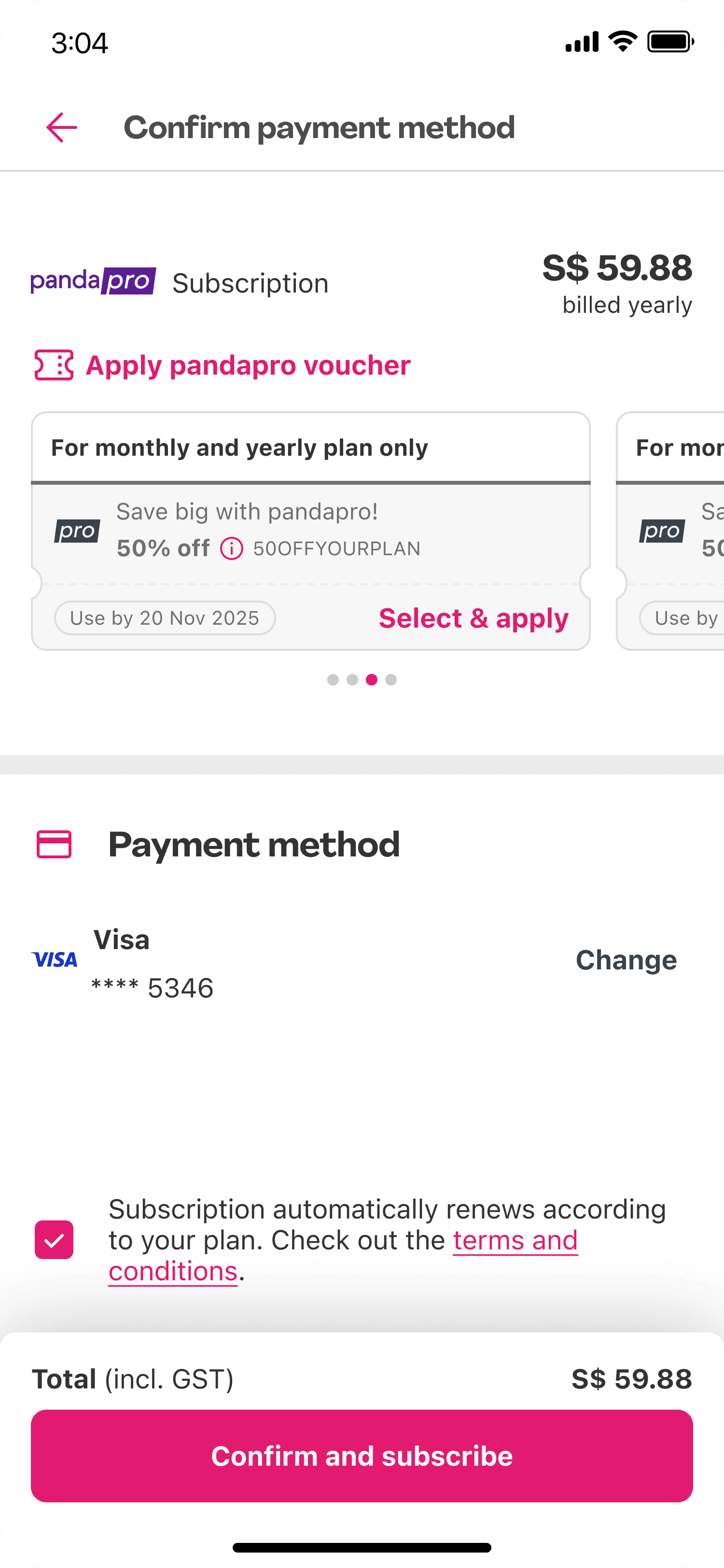
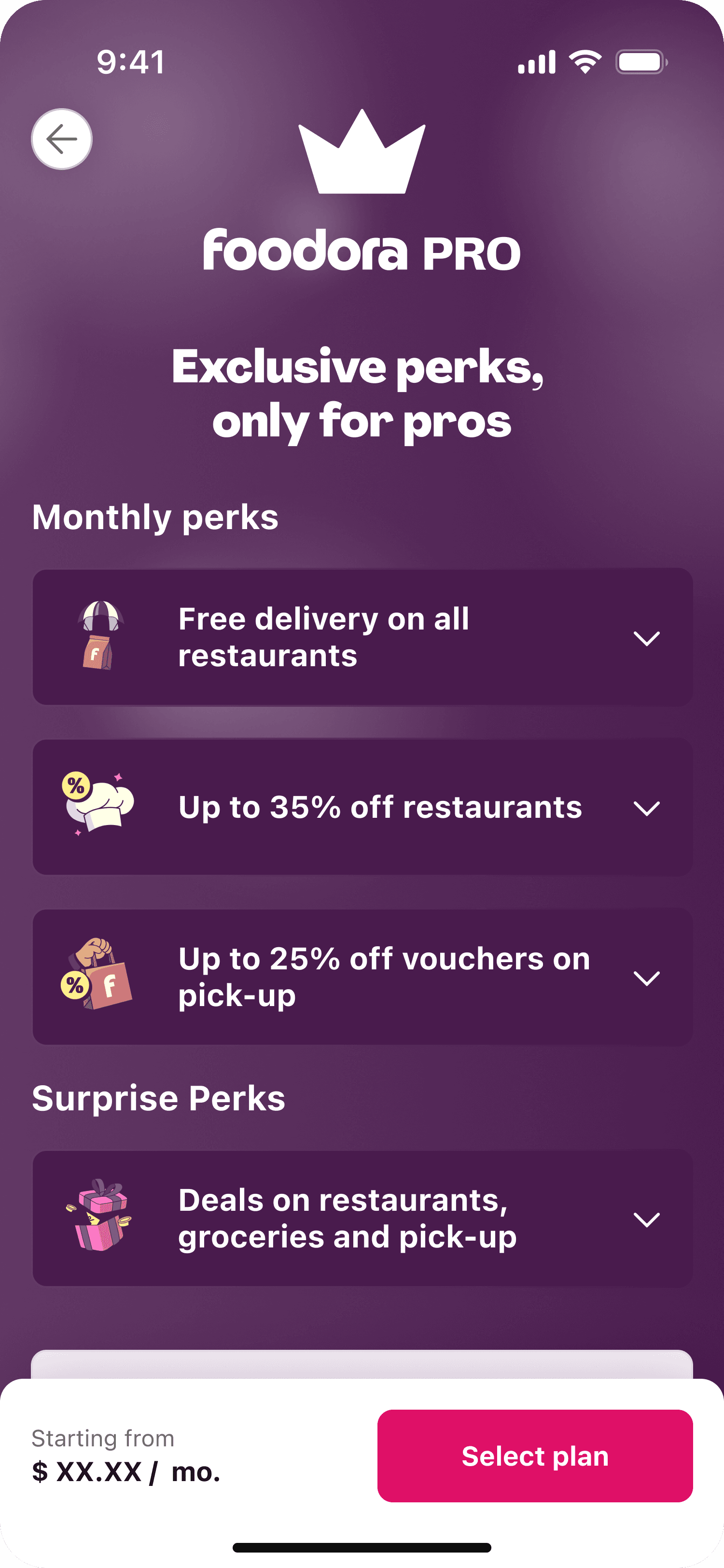
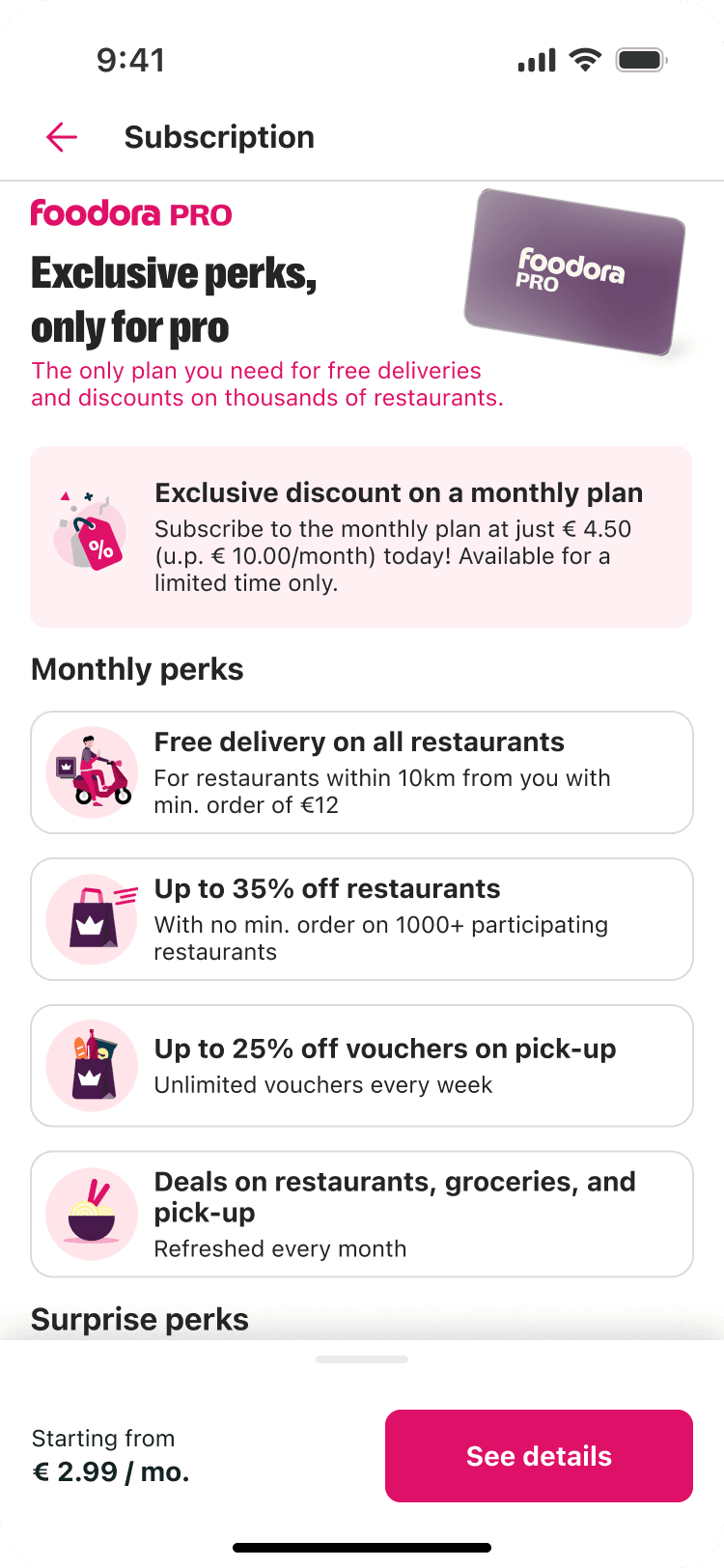
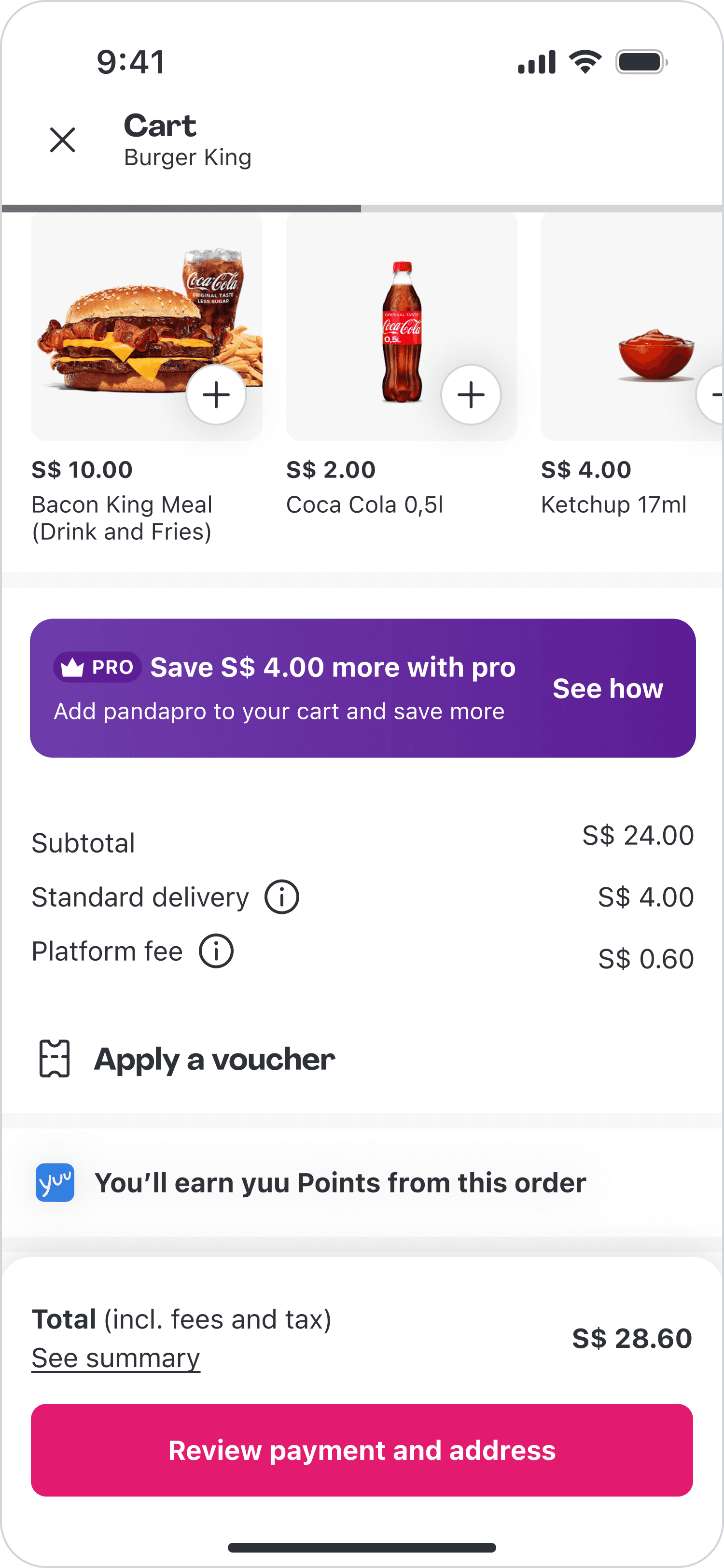
The rebrand was only the beginning as the rest of 2024 focused on revamping existing experiences, targeting acquisition features to ride on the momentum. All the features below* are now live.
*Not all features are shown in the carousel below.
Revamped Experiences
Hover or tap on an image to see the "before".
© 2026 Andy Chan